
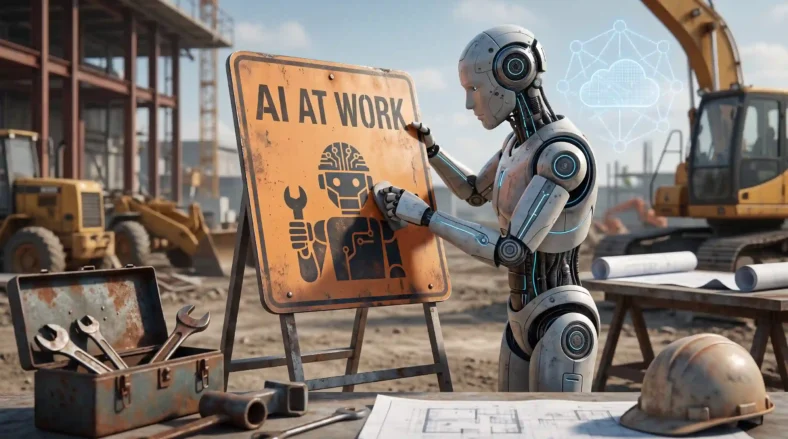
About a year ago, I stepped back into web development after a pretty long hiatus. When I came back, I tried doing things the old way before AI. Being a late adopter, I didn’t know what I was getting into or how much the industry had shifted. People and companies simply don’t build websites the way they used to.
At first, I viewed AI as a cheat. It took me a good half a year to realize it’s not a cheat—it’s just the modern baseline.
What This Means for Our Workflow
- Speed and Deployment: By leveraging an AI workflow, a site can be deployed in minutes and fully optimized within about 30 minutes. While I am keeping the exact technical execution under wraps to protect our trade secrets, it means we can realistically deliver a client-ready build in under 48 hours, barring unforeseen roadblocks.
- The Role of the Operator: I don’t write code the manual way anymore, but that doesn’t mean the machine runs itself. The developer’s role has shifted to an architect and supervisor—overseeing the build, maintaining quality control, and keeping the AI framework locked in.
- Content and Direction: Buckeye Web Development is officially operating on an AI-integrated stack. Future updates and logs on the site will reflect this reality as we phase out legacy workflows.